By Robert F. Sumrall (DD-762)
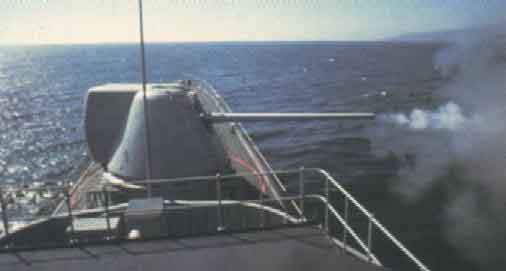
The Mk 38 Gun Mount was designed specifically for the Sumner-GearingClass destroyers
and featured a twin arrangement of the 5-in./38-cal. Mk 12 gun developed especially for
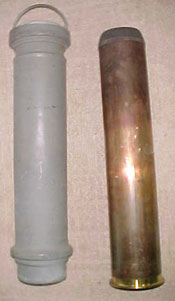
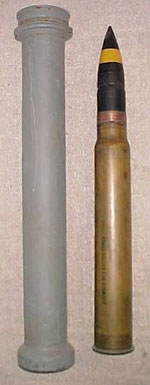
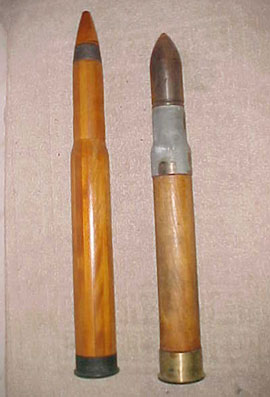
destroyers in the early 1930s. The basic round for the Mk 12 gun was semi-fixed, with a
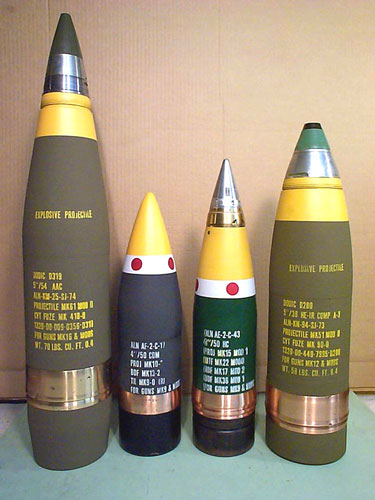
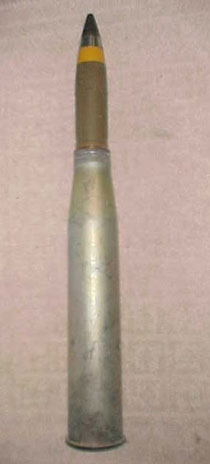
54-pound projectile and a 28-pound shell case that included a 15-pound powder charge. The
initial velocity of the round was 2,600 feet per second with a maximum range of 18,200
yards at 45 degrees elevation and a ceiling of 37,200 feet at 85 degrees elevation.
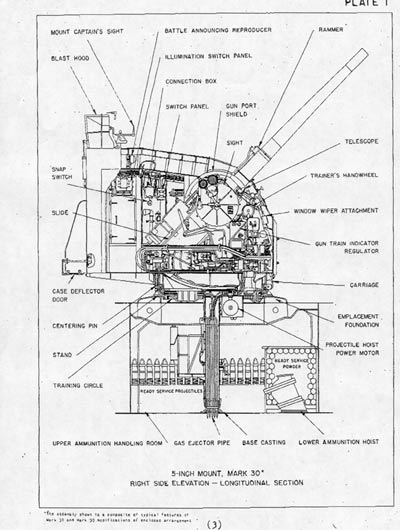
The Mk 38 Gun Mount was similar to the Mk 28 mount used on battleships and the Mk 32
mount made for cruisers. The Mk 38 mount was a base-ring-type mounting consisting of a gun
house and carriage with rotating structure, a fixed stand for mounting the base ring, and
a circular foundation bulkhead to support the fixed stand.
The gun house was the armored portion of the rotating structure that contained the gun
and slide assemblies, gun-laying equipment, and fire-control equipment. The right and left
hand gun assemblies were identical except for the opposite-hand arrangement of the gun
housing. The gun house rested on a heavy framework supported by the base ring assembly.
The base ring rotated on roller bearings within a fixed stand . A central column extended
down to the deck of the handling room below, where it was seated and rotated in the base
casting. The projectile and powder hoists were suspended from the under side of the base
ring and were supported by the central column.
The fixed stand was a heavy steel casting bolted to the ship's deck. It housed the
roller bearings, which supported the base ring and carriage, and the training circle. The
mount rotated on horizontally placed, coned-steel roller bearings. Smaller vertical, or
radial, steel roller bearings prevented lateral movement. The training circle was an
internally toothed annular rack bolted to the inside of the stand just below the
horizontal rollers. The pinion of the training gear extended down from the gun house
inside the training circle and engaged the rack to train the mount. The stand was bolted
to a machined-steel ring on the deck.
The foundation bulkhead was a fixed, circular structure below the deck, concentric with
the center of the mount, which distributed the loads as the guns were fired. A rotating
ready-service ammunition-handling ring, often referred to as the
"merry-go-round," operated within the circular foundation bulkhead. The
merry-go-round stored ready-service powder and projectiles but rotated independently of
the mount. The projectile and powder hoists, which were attached to the central column,
rotated with the mount. This arrangement facilitated the selection and loading of
projectiles and powder in any position of the mount. Ammunition was brought up from the
magazines and lower handling rooms by endless-chain hoists to an area adjacent to the
circular foundation bulkhead. It was then passed through scuttles in the bulkhead and
loaded in the merry-go-round racks.
Projectile fuzes were "cut" automatically in the projectile hoist during the
hoisting operation by the fuze-setting indicator-regulator attached to the hoist.
Fuze-setting orders were received -electrically from the gun director or plotting room and
mechanically transmitted to the fuze on the projectile. Fuzes could also be cut locally by
hand-cranking the orders into the indicator-regulator. Automatic fuze setting was
available only on base-ring-type mountings.
The mounts could be rapidly trained at a rate of 25 degrees/second and elevated from
-15 degrees to 85 degrees at 15 degrees/second and loaded at any angle of elevation. The
gun was capable of a higher rate of fire than the gun crews could handle. An experienced
crew could maintain a rate of 15 rounds/minute and as many as 22 rounds/minute at ideal
loading angles.